Quantity surveying plays a crucial role in the construction industry, ensuring that projects remain financially viable, efficiently managed, and completed to the highest standards. At John Burke Associates, our team of Chartered Surveyors and Chartered Building Consultants provides expert advice and cost-effective solutions to meet your project needs.
What Does a Quantity Surveyor Do?
A Quantity Surveyor (QS) is responsible for managing costs and contracts on construction projects, ensuring financial efficiency without compromising quality. Their key responsibilities include:
Cost Planning & Estimation – Preparing initial cost estimates and advising on budget allocation.
Cost Efficiency – Preventing overspending and maximising return on investment.
Budget Compliance – Keeping projects within financial parameters from inception to completion.
Project Success – Ensuring high-quality construction while managing resources effectively
Risk Reduction – Identifying and mitigating financial and contractual risks.
Sustainability – Encouraging eco-friendly practices and cost-effective resource usage.
When Should You Engage a Quantity Surveyor?
A Quantity Surveyor should be involved from the early planning stages of a project to provide comprehensive cost management and strategic advice. Their expertise proves invaluable at:
The concept and feasibility stage
The design and pre-construction phase
Throughout the construction process
Upon project completion and final account settlement
At John Burke Associates, we pride ourselves on delivering tailored, sustainable, and cost-effective surveying solutions. Our expertise in quantity surveying ensures that your project is managed with precision, transparency, and financial control.
For expert advice, contact our dedicated team today via phone, email, or our online form. Alternatively, call us on 01708 770 770 to discuss how we can support your project’s success.
Here atJohn Burke Associates, we have had the pleasure of working on some of the most exquisite architecture. From innovative modern designs to sublime historical buildings, each project is enjoyable through its individual merit. For example, state-of-the-art technology used in modern construction is constantly evolving, giving developers innovative ways to build. Thus, providing project managers such as ourselves with new and exciting methodologies and process models. However, there is something about historical architecture, which is thought-provoking, when one considers architecture before technology.
Why is Historical Building Preservation Important?
In addition to the law, there is an abundance of reasons to support the preservation of historical buildings and architecture. Whilst the covenants of working on a listed building are often more complicated, the reward is also much higher. Here are a few reasons we believe preserving history is also beneficial.
Intrinsic Value
Many historic buildings play a bigger role in our communities than you may imagine. The grand designs and intricate details of older buildings were created by materials such as rare hardwood from primary forests which no longer exist. Such buildings are often focus points for towns and cities to serve as a reminder of the area’s history.
Environmental Considerations
In an era where net zero is at the forefront of the construction industry’s priorities, refurbishment is a positive step. Regeneratingoldbuildings to give them a new lease of life saves energy resources spent on building materials, equipment, transportation, and tools. Therefore, reducing the harms of construction waste while preserving historical beauty.
Educational & Cultural Aspect
As mentioned earlier, when looking at an older building, one can’t help but appreciate the beauty created without advanced technology. These buildings are evidence of the work our forefathers and ancestors put into making our towns and cities beautiful. Restoring and preserving historicalbuildings and landmarks enriches the cultural values of those residing nearby. Consequently, unifying goals towards a better future whilst preserving the fundamental history of construction.
Work with an Award-Winning Team
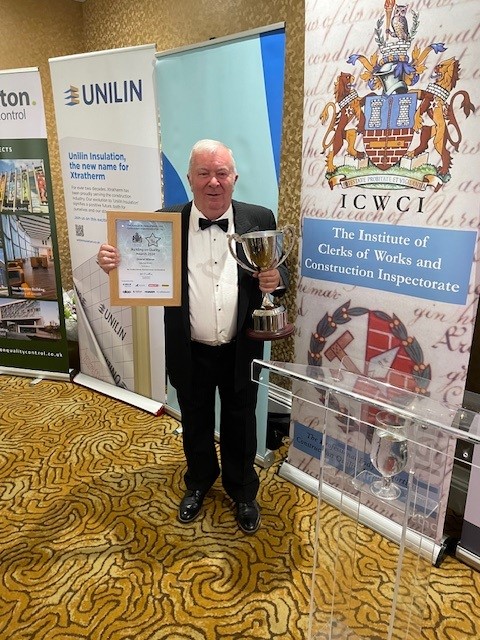
John Burke Associates provides a comprehensive portfolio of services to our clients. Our award-winning team have worked on a variety of projects pertaining to listed buildings. Our father and son team David and Dale Hayward received the prestigious Peter Wilson Award 2022. This was given for their work on the grade 1 listed Indigo Hotel in Bath a large and complex project. Most recently Gilly Carr FICWCI, for his monumental achievement at this year’s Building on Quality Awards.
John Burke Associates congratulates Senior Clerk of Works, Gilly Carr FICWCI, for his monumental achievement at this year’s Building on Quality Awards. The prestigious event in Glasgow announces Gilly Carr as the Overall Winner, showcasing his dedication and exceptional skills in construction.
What are the Building on Quality Awards?
The Building on Quality Awards celebrate excellence in construction, recognising individuals and teams for outstanding project results. These awards highlight quality, safety, and innovation in construction, setting a benchmark for the industry. Each year, they bring together professionals to acknowledge hard work, commitment, and contributions.
Gilly Carr’s Remarkable Achievement
Gilly Carr’s recognition as the Overall Winner marks a significant milestone for him and John Burke Associates. His dedication to maintaining the highest quality standards and attention to detail earns him this honour. As a Senior Clerk of Works,Gilly ensures all projects under his supervision meet rigorous standards.
Commitment to Quality at John Burke Associates
Quality drives everything at John Burke Associates. Our team delivers projects that exceed client expectations, adhering to high safety and innovation standards. Gilly’s achievement underscores our commitment to these values, showcasing our professionals’ calibre.
Looking Forward
The recognition at the Building on Quality Awards inspires everyone at John Burke Associates. It reinforces our belief in quality and encourages us to strive for excellence. We are incredibly proud of Gilly Carr and all our team members who make our projects successful.
Join Us in Celebrating
Join us in celebrating this fantastic achievement. Gilly Carr’s success reminds us of what hard work, dedication, and a pursuit of quality can accomplish. As we look forward, we remain committed to these values and delivering exceptional project results. If you need assistance on your next project, speak to our award-winning team at John Burke Associatestoday.
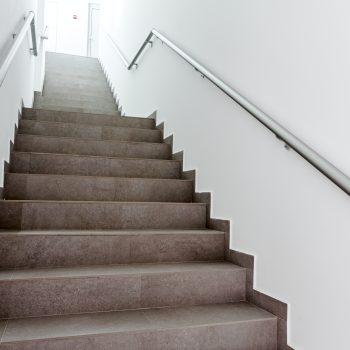
Starting 30 September 2026, a pivotal change will reshape the landscape of residential construction in England. All new residential buildings reaching 18 metres or above are mandated to incorporate a second staircase. This groundbreaking decision follows meticulous consideration of the responses garnered from a consultation on the fire safety guidance of the building regulations, known as Approved Document B.
The Genesis of Change
The consultation, which unfolded between December 2022 and March 2023, attracted 285 responses, reflecting a broad spectrum of perspectives. Its primary focus was the potential integration of second staircases in new residential edifices of 18 metres and upwards, across England. Originally, the governmentproposed a threshold of 30 metres for this architectural inclusion. However, this suggestion met with diverse opinions; while 25% of respondents aligned with the proposal, a notable 48% opposed it.
A Closer Look at the Responses
Among the detractors, 5% advocated for the absence of any threshold, signalling a more stringent stance on fire safety measures. Opinions varied widely on the ideal threshold, ranging from 11 metres to 60 metres. Despite the debate, a consensus emerged in favor of setting a threshold, reflecting a collective effort to enhance resilience and build public confidence in building safety.
A Responsive Framework
Acknowledging the feedback, the government has set the wheels in motion for the adoption of the new guidance by 30 September 2026. Building applications henceforth will need to align with these updated regulations, ensuring a two-staircase design for qualifying structures. Applications that fail to meet this criterion will have a grace period of 18 months for constructioncommencement, providing a buffer for adaptation to these changes.
Industry Reactions
Royal Institute of British Architects (RIBA) has warmly received this update, recognising it as a vital step forward in pursuing a safer built environment. Jack Pringle, chair of RIBA’s board, praised the initiative while highlighting areas for improvement. These included the need for a second fire-fighting shaft and evacuation lifts, both crucial for emergency operations.
Looking Ahead
This regulation marks the beginning of a broader conversation on fire safety in residential buildings. The government is expected to respond soon to other aspects of the consultation. This includes the proposal to install sprinklers in care homes & the overhaul of the national classification system for construction products. As we approach these transformative changes, the commitment to a safer, more resilient built environment remains strong. The shared goal is to protect lives and boost public trust in our urban structures. If you need guidance on your next project contact the team at John Burke Associates today.
As we edge past the six-month transition period for Higher Risk Buildings (HRBs), a recent study by NBS sheds light on a significant industry challenge. It reveals that half of the professionals are still in the dark about their responsibilities under the Building Safety Act 2022. This lack of clarity poses a considerable risk to the industry’s ability to adapt and comply with new regulations.
A Call for Better Understanding
The findings are a wake-up call. Only a fifth of those surveyed feel ‘very clear’ on their duties concerning Higher Risk Buildings (HRBs). Such uncertainty underlines the urgent need for enhanced awareness and education. Russell Haworth, CEO of Byggfakta Group, echoes this sentiment. He recalls Dame Judith Hackitt’s firm message on the inevitability of regulatory change. The industry must grasp the intricacies of the Building Safety Act to uplift building safety standards.
The Golden Thread of Building Information
Another pressing issue is the management of the Golden Threadof Information. Less than half of the respondents understand how to maintain essential safety-related building information. A mere 10% have a concrete strategy in place. This gap in understanding and planning is alarming. Dr Stephen Hamil stresses the importance of a continuous, accessible flow of information to uphold safety throughout a building’s lifecycle.
The Role of Robust Specifications
Specifications play a pivotal role in ensuring safety from the design phase. They are crucial for demonstrating compliance with Building Regulations. The Building Safety Act, as Hamil points out, offers a chance for the industry to assert control over design and construction processes. Effective specification writing is fundamental to preventing substandard construction.
Moving Forward with Consistency
If you require assistance with your respective duties contact John Burke Associatestoday. We provide expertise and support to ensure clients comply with their statutory obligations. Furthermore, we believe in delivering a collaborative service and ultimately gaining the client’s trust and commitment. Therefore, our clerks of works division undertake a systematic and vigilant inspection of constructionworks in progress. This includes workmanship, materials and compliance to standards.